October 09, 2026


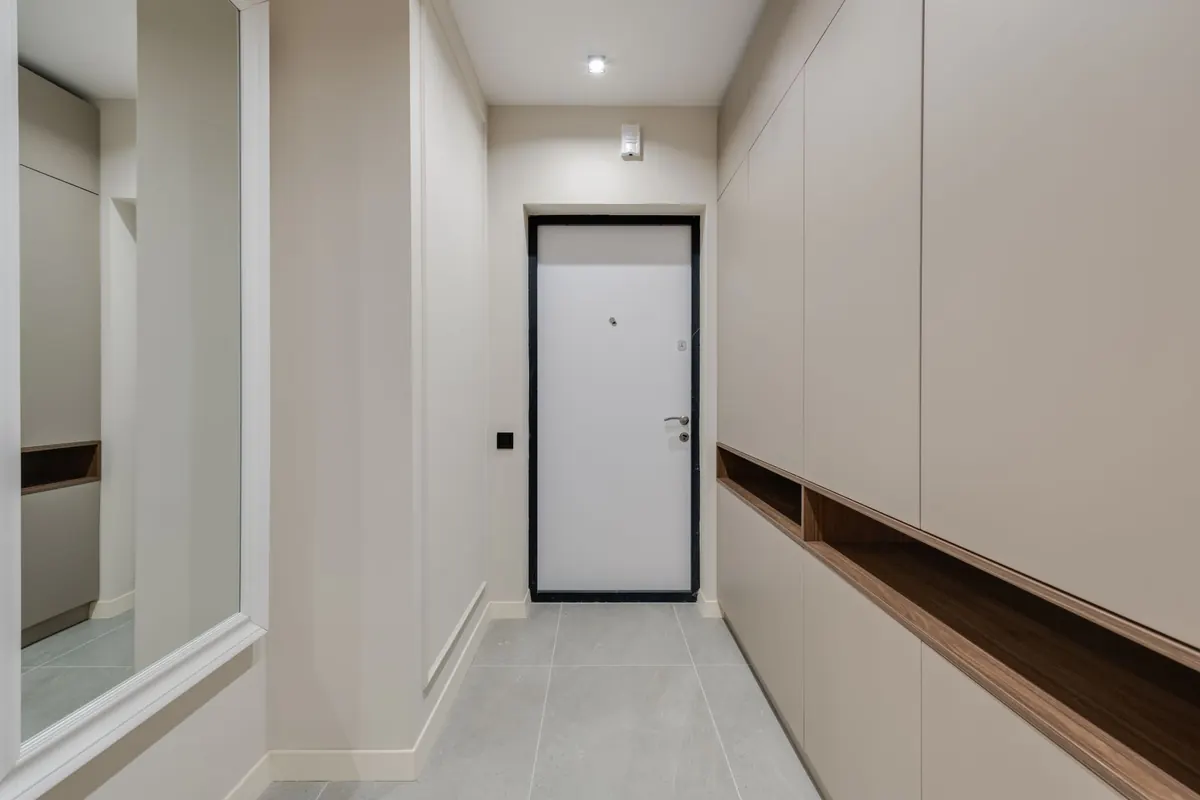
A rented hallway is a tricky space. It is usually the narrowest room in the flat, it has more doorways than wall, and every fix you can think of seems to need a drill. The good news is that the modern rental market has caught up: there is now a genuinely useful range of damage-free fittings that hold real weight, and a handful of layout tricks that make a tight corridor feel less like a wind tunnel. Here is how to make a cramped hallway work harder without risking your deposit.
Before buying anything, spend ten minutes with a tape measure and a phone camera. Note the width of the corridor at its narrowest point, the height of each clear wall section, and the depth of anything already fixed, such as a radiator, a meter cupboard or a door frame.
You are looking for three things: walls with nothing behind them that a hook could snag on, a section of floor where a slim piece of furniture will not block a doorway swing, and vertical space above eye level that is currently doing nothing. That last one is where most hallways lose storage. The area above the coat hooks and the strip above a door frame are usually free, and neither gets in anyone's way.
If a landlord or letting agent is involved, it is worth checking the tenancy agreement on adhesives and wall fixings. Most forbid screws but allow removable strips; some are stricter. A quick email now saves an argument at checkout.
Adhesive hooks have improved enormously, but they still fail for predictable reasons. They fail on dusty paint, on textured or freshly painted walls, on damp surfaces, and when they are loaded the moment they go up. Get those four things right and a decent hook will hold a coat, a leash and a set of keys for years.
Test any new fitting somewhere hidden first, such as behind a door or inside a cupboard. If a strip lifts the paint there, you will know before it matters.
Freestanding is your friend. A narrow shoe bench, a tiered rack or a slim console table about 25 to 30 centimetres deep will hold keys, post, a bag and a pair of shoes without stealing the walking line. Look for pieces with legs rather than a solid base, so the floor stays visible and the corridor reads as wider than it is.
The best no-drill trick in a hallway is a tension rod. Span it between two flat surfaces in an alcove, a recess or the gap beside a cupboard, add S-hooks or shallow baskets, and you have instant hanging storage for umbrellas, totes and scarves. Check the rod's stated weight limit, keep it level, and avoid using it where the walls are dry-lined or crumbly, as the pressure can dent the plaster.
Stackable lidded boxes are the other quiet winner. Buy one range in a single colour so it reads as intentional, and keep them low, ideally under 40 centimetres tall, so they do not crowd the space. Label the lids if you are storing seasonal items you only touch twice a year.
A door is a storage surface you are already paying for. An over-door rack on the hall cupboard or the living room door will take coats, bags and the ironing board. Do check clearance: the door needs to close, and the rack needs to sit above the handle. For a lighter load, adhesive strips on the door itself work well, provided you clean the surface and avoid cheap hollow doors, which can flex.
Storage is only half the job. A hallway that holds everything neatly but looks like a locker room still feels unwelcoming, and it is the first thing you and your guests see.
Put a mirror on the longest wall, ideally opposite a window or a lamp, so it bounces light back down the corridor. Choose a runner that is narrower than the hall by at least ten centimetres on each side, and run it the length of the space to draw the eye forward. Warm white bulbs, around 2700 to 3000 kelvin, flatter a small, dim space far more than cool white ones do.
Then add one thing that is purely decorative: a framed print, a shallow bowl for keys, a small plant that tolerates low light. Group small objects on a tray rather than scattering them along the wall, and keep the top of any shelf about two-thirds full. Empty space is not wasted space in a small hallway; it is what stops the room feeling cramped.
Removal matters as much as installation. Warm the adhesive gently with a hairdryer on a low setting, then peel the tab slowly downwards against the wall rather than outwards. Do not yank, and do not rush it. If a hook resists, a length of dental floss worked behind it will ease it away from the paint.
Sticky residue usually comes off with a little cooking oil rubbed in with a fingertip, followed by warm soapy water. Tension rods leave faint marks, so wipe the contact points with a barely damp cloth and dry them straight away. Photograph the walls once everything is down, which gives you a dated record if a deposit dispute ever comes up.
Finally, keep a small tin of touch-up paint in the original colour if you can find it. Two minutes with a brush on a scuff mark on the day you leave is worth more than an hour of explaining.
Photo: Max Vakhtbovych / Pexels
Small ideas for cozy corners and compact homes.
Copyright © 2026 Nook Bit. All rights reserved. Nook Bit.